The short answer
Letters are the court's paper saying you are the executor or administrator. You apply to the probate court in the county where your parent lived. You file the will, if there is one, and sometimes you post a bond.
Until you have letters, your authority is limited. In that time you can keep things safe, and pay as little as you can from your own money.
This chapter explains how things usually work in the United States. It is not legal, tax or financial advice, and the rules where you live may differ. Before you act on anything here, check it with one of the people named at the end of the chapter.
What to do
- Find the probate court for the county where your parent lived.
- Ask the clerk which forms it uses and whether there is a self-help center.
- File the will, if there is one, and the application.
- Ask whether you need a bond.
- Order several copies of the letters once they are issued.
- Keep every receipt for anything you pay before then.
What can wait
- Selling anything. That needs your authority first, and it is a decision for later.
- Paying your parent's debts. They have their own order and timing, in What do I tell creditors, and am I responsible for the debts?
Who can help
The probate court clerk in the county where your parent lived can explain the court's forms, its routes and what it needs from you.
A probate lawyer can tell you which route fits this estate, and whether a bond applies. Your parent's bank's estate team can tell you what it needs to see.
The rules, phone numbers and web addresses in this book were checked against the agencies’, courts’ and organizations’ own pages in October 2026. Where a rule differs by state, the book names one state as an example. Check anything you rely on with the office itself.
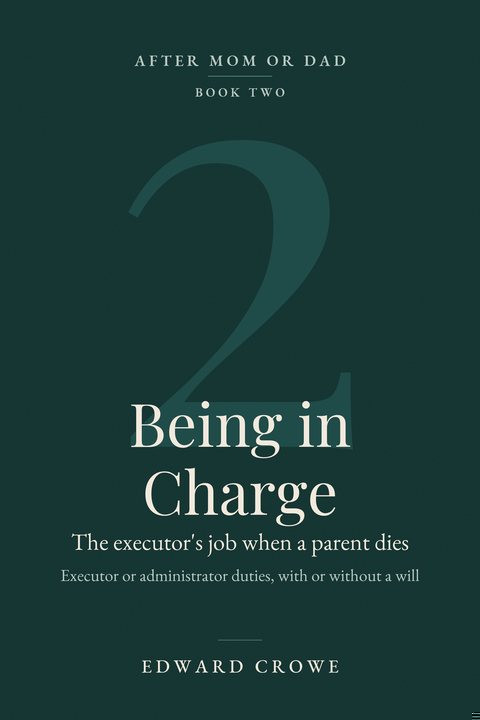
From Book 2: Being in Charge
This page has the short answer and the closing lists from chapter 5. The full chapter explains, in plain words, what exists, what to ask, and who can answer. The book covers months 1 to 9 after the death.
Questions near this one
Other questions on related subjects, from this book and the others.
- What if there is no will? Book 2, Being in Charge
- Am I the executor, and do I have to accept? Book 2, Being in Charge
- When can I hand out the inheritance? Book 2, Being in Charge
- What do I tell creditors, and am I responsible for the debts? Book 2, Being in Charge
Hear when Being in Charge is out
A short note when each book is out. Five or six emails a year at most. You can unsubscribe whenever you like.